

Over the last four years, I’ve been three different people:
At 21, I was skinny, sad, sedentary, unmotivated. I played video games for 12 hours a day and my go to dinner was bagel bites. My body composition reflected that.
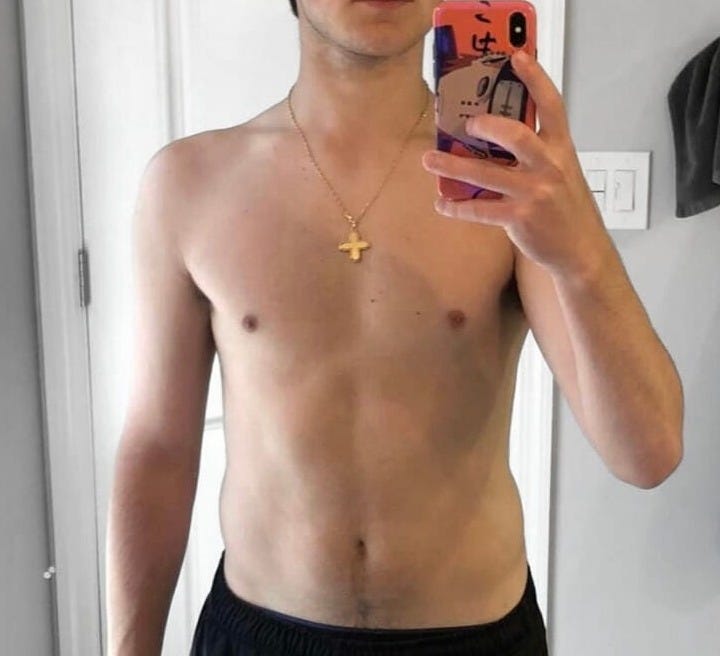
At 23, I was motivated and working hard, but my training was boring and my diet was too strict. I struggled with sustainability. My body composition reflected that.
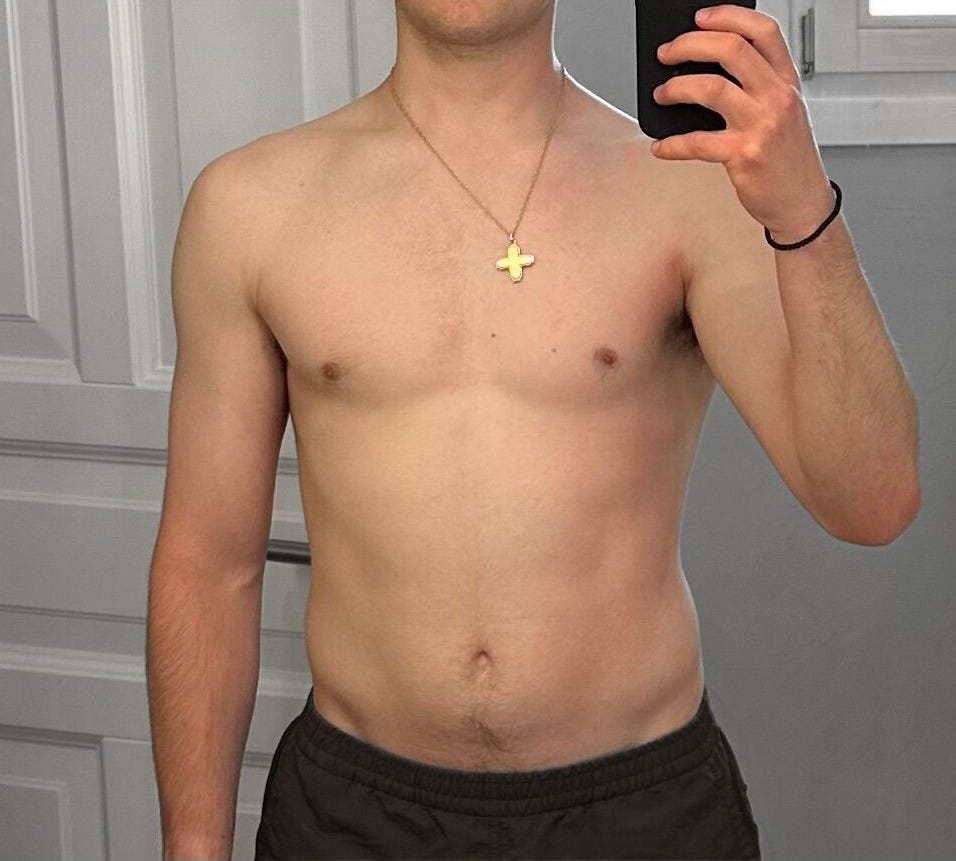
At 25, I am disciplined and educated. I train hard. I love my diet so much it’s not even a diet. I’ve made it fun for myself. I feel great. My body composition reflects that.
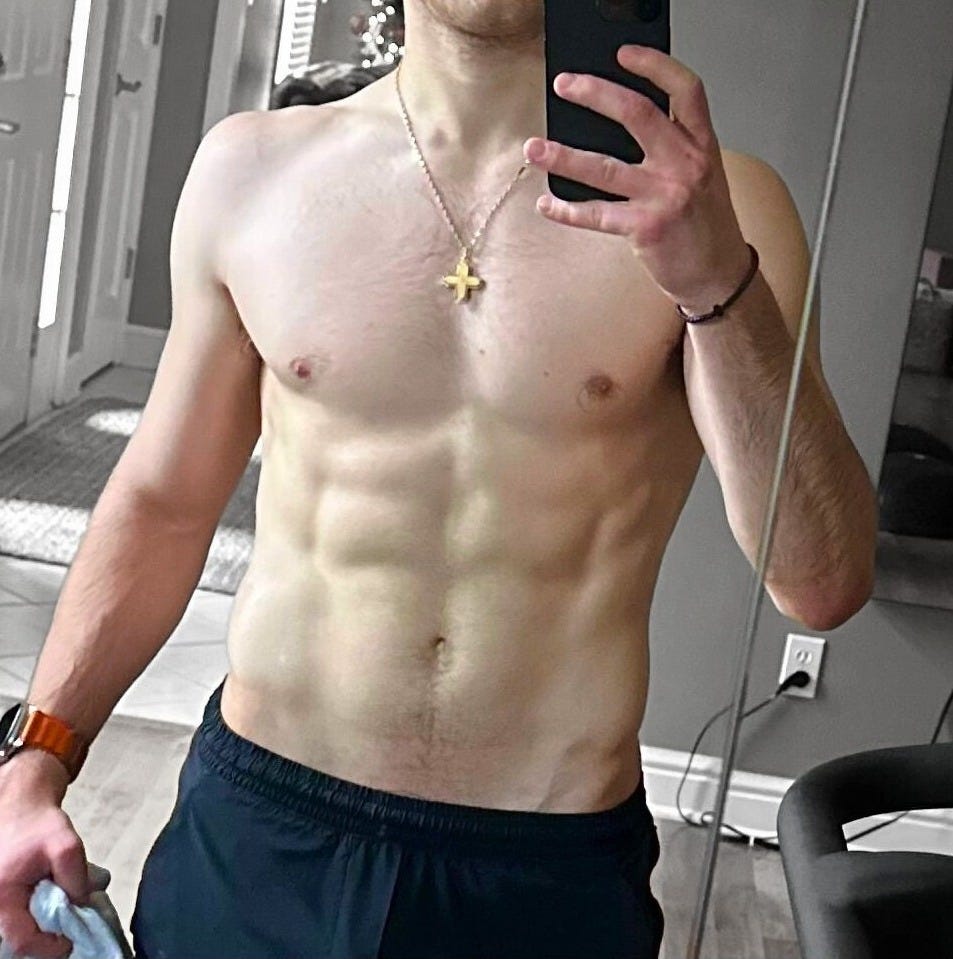
Yes, 4 years is a long time.
You want fast results.
You want a magic potion that will change everything overnight.
You want the Baron Buff.
I’m sorry, but in my experience, that doesn’t exist.
There’s no shortcuts.
It takes time, consistency, and education. You have to spend time figuring it out. You need to find what works for you. This is the golden rule.
Ignore it, and any progress you make is probably useless. This is why people lose weight and gain it back.
Anyway, I guess I lied…
Shortcuts do exist. They might even work for a while. But how long do they last?
Taking the elevator gets you there faster, but taking the stairs builds the strength to stay there.
I love analogies.
If I learned nothing else after what you’ll learn today, I would be all the same for it.
Why?
Because these are the basics.
These are the things that will take you 90 yards.
This is mastering the free throw.
I want to teach you the fundamentals—the things that truly matter.
(If you want deep dives on fat loss or muscle building, my guides launch soon.)
Alright, let’s do it.
What Controls How You Look?
Most people want to lose fat or build muscle. Shoutout if your goal is to gain fat, you are a demon.
Here’s the body composition skill tree:
Nutrition (HP)
Exercise (XP)
Lifestyle (Game Mechanics)
1. Nutrition
You’ve probably heard “You can’t outwork a bad diet.”
I’m sorry, but it’s true.
You can exercise until you’re blue and not lose weight.
You can lift weights until your muscles explode and not get stronger.
Neither goal is possible without proper nutrition.
The key to fat loss and muscle gain is caloric intake:
Want to lose fat? Eat less than you burn (caloric deficit).
Want to build muscle? Eat the house and lift like mad (caloric surplus).
That’s it. No diet, supplement, or “bio hack” can change this.
If I ate 200 Twinkies per day but stayed in a deficit, I could find a way to look like Thor. I’d feel awful, but it’d work.
Likewise, If I ate a perfect diet but still overate, I’d make swift progress towards looking like Jabba the Hut.
Next, Macros! Macronutrients are the 3 main nutrients your body needs in large amounts:
Protein: Essential for muscle growth and fat loss. Aim for 1g per pound of body weight.
Carbs: Fuel workouts and daily energy. Stick to whole, unprocessed sources.
Fats: Regulate hormones and recovery. Get them from nuts, seeds, fish, and healthy oils.
Micronutrients are the vitamins and minerals your body needs in small amounts that affect energy, hunger, health, and overall function.
The Playbook:
Eat real food. Meat, fish, eggs, fruits, vegetables, etc.
If it comes in a box, bag, or wrapper, question it.
Drink water, coffee, tea.
Again, sustainability is key. Don’t become a slave to your diet or you will be miserable and you will fail. Yes, the aforementioned playbook is strict, but that’s just what you should do MOST of the time. Have your little treat after dinner, get pizza on the weekends, grab lunch with friends one or twice a week. Make it yours.
A nutrition plan that is 80% perfect and followed 100% of the time is better than a diet that is 100% perfect but broken 20% of the time.
Let that sink in.
Trust me. I’ve been around the block.
2. Exercise
Fat loss and muscle gain both require strength training and movement.
Strength Training:
Want muscle? Lift weights and progressively overload (increase weight/reps over time, ex. bench press goes from 135 to 140, or from 6 reps to 7, week/week). Pair this with a slight caloric surplus (200-300).
Want fat loss? Lift weights to preserve muscle and boosts metabolism (lifting weights means increasing muscle mass, which burns more calories at rest. It also creates an after burn effect, where your body continues to burn calories post workout as it recovers and repairs muscle tissue). Pair this with a slight caloric deficit (300-500)
Focus on compound lifts: Squats, deadlifts, bench press, pull-ups, etc. These give you the most bang for your buck, especially from a time perspective.
Train at least 2x a week (full-body).
Side note: I like to think of lifting as a safety net for nutrition. Any excess calories you might consume could end up going towards muscle as opposed to fat, which is great!
Cardio:
Big cardio events (running, cycling, etc.) burn calories but spike hunger—making fat loss harder (key word here, harder, not impossible. (Typically people eat back all the calories they burn and wonder why they aren’t making progress).
A theory I want to debunk: Cardio doesn’t kill muscle if you eat enough and recover properly, it just makes nutrition that much more important. We want things to be simple. Nutrition is already hard…
Solution? Walk more. It burns calories without making you a ravenous beast. Aim for 7,500 to 10,000 steps daily. (While the step goal is important, it is not a perfect solution. Think of it as a buffer between you and your nutrition). If you think this is a lot, it’s roughly an hour. Break it up into 3, 20 minute sessions and call them breaks at work. Get creative. Walk before breakfast, or after dinner. Make it fun, listen to a book or a podcast. Your oyster.
Side Quest: I think back to the lacrosse tournaments I played in growing up. When I came home, do you think I wanted anything other than two pounds of pasta? Science aside, this perfectly illustrates my point—vegetables weren’t even a consideration. My muscles were screaming for carbohydrates, and that’s exactly what I gave them.
To hammer home the point, yes, cardio is great for burning calories, but if you’re not careful, you’re setting yourself up for failure. Intense cardio depletes your energy stores, spikes your appetite, and makes it far too easy to eat back everything you just burned—plus some.
Recovery:
Your muscles grow when you rest, not when you train. Read that again.
Stretch, do mobility work, and recover properly. Injury means setbacks. The goal is to STAY IN THE GAME.
3. Lifestyle
This is where long-term success happens.
Sleep is a non-negotiable. Poor sleep wrecks hormones, recovery, and appetite.
Move more. Take the stairs. Park farther. Stand more. Small things add up.
Track progress. Weigh yourself, log workouts, take photos, measure habits.
One Random but Crucial Tip:
Stop drinking calories. Soda, alcohol, sugary drinks do nothing for you. Some people lose 100 pounds just by cutting beverages.
The Key to Making It Stick:
If you want lasting results, these ideas need to become a part of your life. This is how you live now if you want to stay in shape.
These are the rules you need to follow most of the time to stay lean or get lean.
The good news, is that in time, this stuff becomes second nature.
Fall in love with being someone who is “healthy” and these decisions will become a part of who you are. They won’t be just another failed plan.
No crash diets. No “8 week programs.” No quick fixes.
80% consistency beats 100% perfection.
Follow these principles, and you’ll get the body you want and keep it.
I’ll be diving deeper into each topic soon. Thank you for reading.
—Dante
P.S. The original draft of this was 2000 words. I tried my best.