

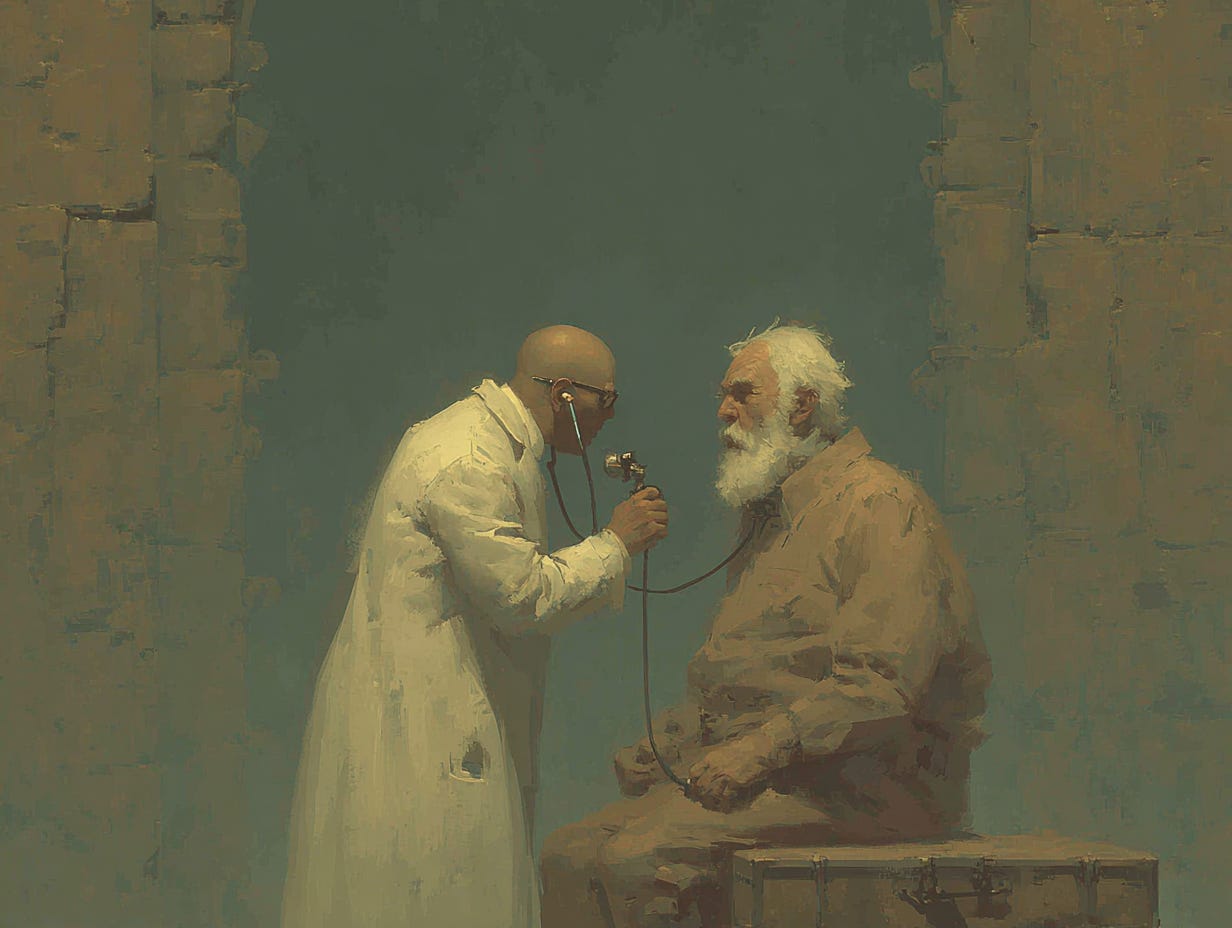
Peter Attia is a doctor who specializes in longevity. His approach to living longer piques my interest, and it should yours too. I like him because he doesn’t just educate his fans and clients on how to live longer, but how to live better.
Longevity is a weird word that sometimes makes you think of that oddball down the street who wakes up and stares at the sun, critiquing your every diet choice (which may have some validity).
Yes, everyone wants to live longer, but why would you want to do so if you’re a miserable sack of potatoes all the time?
Peter is my favorite doctor in the space because he’s practical. He meshes science with applicability, with an emphasis on working hard to live a better life. A life that allows you to do the things you enjoy (the things that make life worth living) for longer. He’s a Stanford grad who spent years at med school at Johns Hopkins. For fun, he derailed into the world of consulting, working with McKinsey before he built his own practice. He’s a cool dude.
One topic that Peter emphasizes often for the sake of health, wellbeing, and longevity is VO2 max. Simply put, VO2 max is the body’s ability to use oxygen to fuel itself.
“VO2 max is key to living a fulfilling, independent life as you age.”
— Peter Attia
VO2 max is a rate limiter for everything. The body uses oxygen to create ATP to power the rest of your system. If you can’t put enough oxygen into your muscles to power the activity in front of you, then you’re shit out of luck.
To most people, it‘s not a big deal (right now at least). As it stands, most of the activities you enjoy, most of the activities you perform to live, don’t require an astonishingly high VO2 max.
Think getting up off the couch, going up the stairs, cooking and bathing, carrying grandkids, going for a walk, golfing, whatever it is you like to do.
As you age, VO2 max declines precipitously and it becomes increasingly difficult to get back.
Your VO2 max will eventually decline past the threshold required to live normally. Basic activities become hard, and then impossible. It’s not a matter of if, but when.
There will come a day when activities that were once easy, become hard. Basic things. Things that are effortless now. We all know someone who just can’t seem to do basic human shit — and It’s so sad.
This is primarily the result of a low VO2 max.
Training VO2 max now will hopefully get it high enough so that as it declines you can effectively keep the walls from caving in. You’ll be able to enjoy the basic day to day activities for longer into life.
If you wish to walk on the beach with your kids when you’re 80, or carry your groceries into the house when you’re 65, you need to train VO2 max now.
Every activity requires a certain amount of energy to perform.
If you can’t produce enough energy, then you can’t perform the activity.
You might not care to run fast, but you should care to be able to carry your grandkid around when your sons or daughters need you to watch their kids for the day.
Your VO2 max needs to be high enough.
This is not some weird sunbathing pseudoscience that might help. This is a requirement to live a long, fulfilling life. A life that allows you to enjoy the activities you want — that you need to be able to perform late in life.
To train VO2 max, the 4x4 method is the gold standard. 4 minutes of near all out effort that you can perform 4 times, with 4 minutes of rest in between. Or you can ask the internet. Or ChatGPT.
To live longer, better, VO2 max training needs to be a staple in your routine, at least once per week.
VO2 max training is the training that quite literally holds up a ceiling that will forever be collapsing. It’s non negotiable.
Thanks for reading, and as always, godspeed.
— Dante
Things That Have Possessed Me This Week:
Food: Honey Mamas (These things are so addicting)
Training Thought: Stability is as important as strength.
Running Tip: Strengthen your tendons and lower legs.